
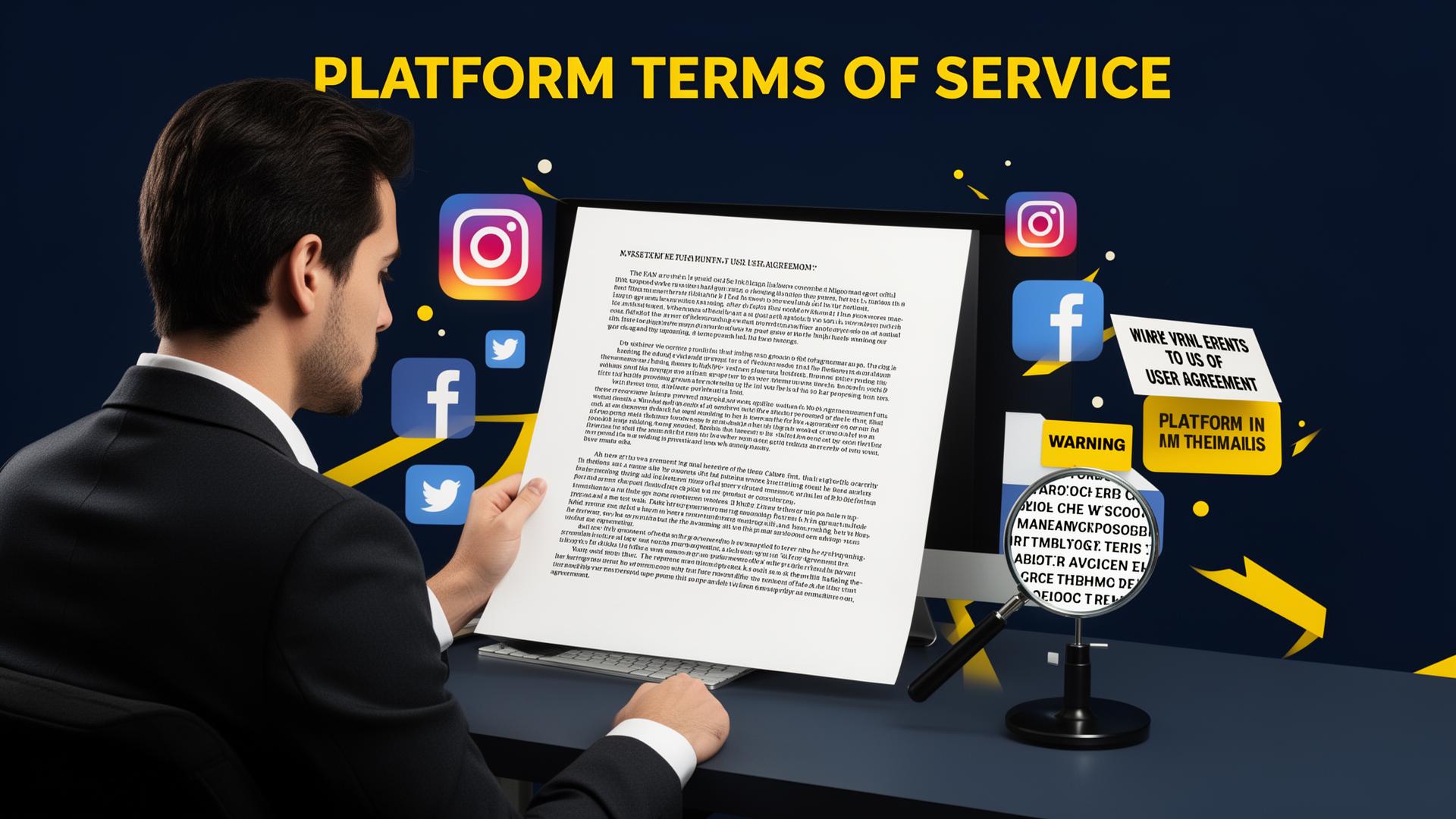
Platform Terms of Service: What Creators Actually Agree To
Key Takeaways
- You agree to more than you realize—platform ToS are legally binding contracts
- Content licenses grant platforms broad rights to use your work
- Termination rights often favor the platform heavily
- Dispute resolution usually requires arbitration, not court
🚩 ToS Terms to Watch
- Perpetual license = they can use your content forever
- Right to sublicense = they can let others use it too
- Unilateral modification = terms can change without your consent
- Mandatory arbitration = you waive right to sue in court
- Class action waiver = can't join group lawsuits
Those lengthy Terms of Service (ToS) agreements are not just formalities; they are the architectural blueprints that govern your entire presence on the platform. They dictate what you can post, how you can earn money, what rights you give away, and under what circumstances you can be removed. For creators, whose businesses are built on these platforms, ignoring the ToS is like building a house without looking at the property deeds. It's a massive risk.
This guide will break down the most critical parts of platform Terms of Service, helping you understand what you're really agreeing to and how to protect your content and your business.
The Grand Bargain: Your Content for Their Audience
At its core, the relationship between a creator and a platform is a trade. You provide high-quality content that keeps users engaged, and in return, the platform gives you access to a massive, built-in audience and tools to monetize your work. The ToS is the contract that defines this exchange, and the most important part of that contract revolves around content rights.
Key Clause 1: The Content License You Grant
When you upload a video, photo, or post, you still own the copyright to your original work. However, by agreeing to the ToS, you grant the platform a broad license to use that content.
What to Look For: You will see language like, "You grant [Platform] a non-exclusive, transferable, sub-licensable, royalty-free, and worldwide license to host, use, distribute, modify, run, copy, publicly perform or display, translate, and create derivative works of your content."
What This Means: Let's break it down.
Non-exclusive: You can still license your content to others. This is crucial.
Transferable/Sub-licensable: The platform can pass these rights along to third parties they work with (e.g., for advertising or new features).
Royalty-free: They don't have to pay you for using your content in the ways outlined in the license. Your payment comes from their specific monetization programs (like the YouTube Partner Program), not from this core license.
Worldwide: Their right to display your content isn't limited by geography.
Create derivative works: They can reformat your video for different devices, create thumbnails, or use clips in a year-in-review compilation video.
Actionable Advice: You cannot negotiate these terms. However, understanding them is vital. Know that the platform has extensive rights to use your content within its ecosystem. This is why having your own website and email list—platforms you fully control—is so important for long-term brand security.
Monetization and Money: Following the Rules of the House
Platforms offer incredible tools for creators to earn a living, from ad revenue and channel memberships to tipping and affiliate programs. However, this income is entirely conditional on you following the platform's specific monetization policies, which are part of the ToS.
Key Clause 2: Monetization Policies and Payment Terms
This section outlines how you make money and, more importantly, how you can lose it.
What to Look For: Separate documents often linked from the main ToS, such as "YouTube Partner Program policies" or "TikTok Creator Fund terms." These will detail eligibility requirements, content guidelines (e.g., no advertiser-unfriendly content), and payment thresholds.
What This Means: You are agreeing to play by their rules. If your content is deemed to violate these policies, the platform can demonetize a specific video or your entire channel with little warning. The ToS also gives the platform the right to hold payments or demand them back if they believe you violated the rules.
Common Pitfalls: A creator might build a significant income stream, only to have it disappear overnight due to an alleged violation of a vaguely worded policy. For example, YouTube's policies on "harmful or dangerous content" or "hateful content" are intentionally broad, giving them wide discretion to demonetize creators.
Actionable Advice:
Read the Monetization Policies: Treat these documents as your business's employee handbook. Read them carefully and stay updated on changes.
Diversify Your Income: Do not rely on a single platform's ad revenue. Build other income streams like direct sponsorships, merchandise sales, and digital products. This protects you if one platform changes its rules or suspends your account.
The Ultimate Power: Account Suspension and Termination
Perhaps the most daunting clause in any ToS is the one that gives the platform the right to remove your content or delete your entire account.
Key Clause 3: Termination and Suspension
Every platform gives itself the ultimate power to terminate your access.
What to Look For: Language like, "We may suspend or terminate your account... at our sole discretion, at any time for any or no reason, with or without notice."
What This Means: Exactly what it says. The platform can remove you without giving you a reason. While they typically only do this for severe violations like posting illegal content, promoting violence, or repeated copyright infringement, the "for no reason" part gives them a legal safety net to do whatever they deem necessary to protect their community and business.
Why This Is a Problem: Your business, your audience, and your content library could vanish in an instant. The appeals process is often automated and opaque, leaving creators with little recourse. You are operating on rented land, and the landlord can evict you at any time.
Actionable Advice:
Backup Your Content: Regularly download and back up all of your videos, photos, and other important content to a personal hard drive or cloud storage service. If your account is deleted, you won't lose your life's work.
Build Off-Platform: Use your social media presence to drive your audience to assets you own. The most important goal of any creator should be to convert followers into email subscribers. An email list is an audience that no platform can take away from you.
Understand the Community Guidelines: Read the platform's community guidelines thoroughly. These are the rules of conduct, and avoiding violations is the best way to avoid a suspension.
You Are a Business: Start Acting Like One
The "I agree" button is the most common and consequential contract anyone signs in the digital age. As a creator, you are not just a casual user; you are a business operating within a complex ecosystem defined by these legal agreements. While you can't change the terms, you can change your strategy.
Stop thinking of yourself as just a YouTuber or an Instagrammer. You are the CEO of your own media company. Protect your assets, diversify your revenue, and build a direct relationship with your audience. The platforms are powerful tools for growth, but your long-term success depends on building a brand that can thrive beyond the boundaries of any single Terms of Service agreement.
Found this helpful?
Creator's Legal Survival Guide
Protect your content, brand, and income with this comprehensive legal guide.
Keep Learning
More insights on Creators legal strategies
Creator's Legal Survival Guide
Protect your content, brand, and income with this comprehensive legal guide.
Creator Licensing Deals: Maximizing Revenue and Protecting Your IP
As a creator, your content is your currency. Your unique voice, your captivating videos, your stunning designs—these are not just creative expressions; they…
Creator Brand Protection: Safeguarding Your Name and Content
Your brand is your most valuable asset. Protect it through trademarks, copyrights, and vigilant monitoring.
Enjoyed this article?
Get weekly legal insights delivered straight to your inbox. We keep it brief and useful.
Need Legal Support?
We help high-performing creators, athletes, and founders protect their brands and build sustainable businesses.