
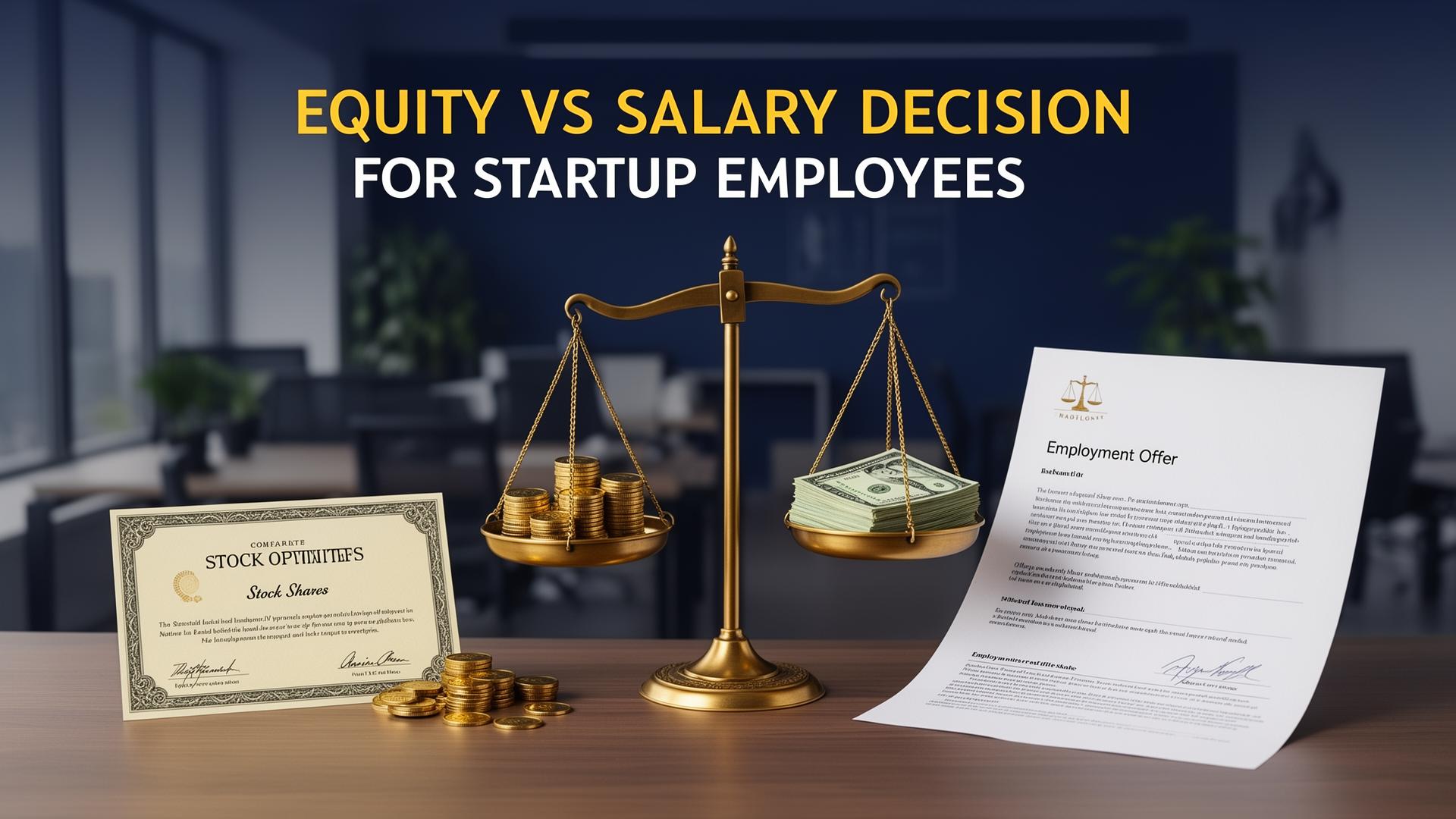
Equity vs. Salary: Legal Implications for Early Employees
By Andrew R. Jacobs, Esq. | Founder & Managing Attorney, Jacobs Counsel LLC | Director, Sports, Entertainment & Gaming Initiatives, Seton Hall University School of Law | Super Lawyers Rising Star 2026
Key Takeaways
- Equity vs. salary is a risk/reward decision—neither is universally better
- Understand your grant type—ISOs, NSOs, RSUs each have different tax treatment
- Vesting protects everyone—don't skip or shortcut it
- 83(b) elections can save taxes—but you only have 30 days to file
The Startup Compensation Trade-Off
Startups can't always compete with big company salaries, so they offer equity to attract talent. The pitch: accept lower cash compensation now in exchange for ownership that could be worth far more if the company succeeds. The reality: most startups fail, and most equity ends up worthless. But when it works, equity can be life-changing. Navigating this trade-off requires understanding what you're actually getting.
Types of Equity Compensation
Stock Options (ISOs and NSOs): The right to purchase company stock at a set price (strike price) in the future. Incentive Stock Options (ISOs) have tax advantages but strict requirements. Non-Qualified Stock Options (NSOs) are more flexible but taxed less favorably. Options have expiration dates and vesting schedules. Restricted Stock Units (RSUs): A promise to deliver shares in the future upon vesting. You don't own the shares until they vest. RSUs are taxed as ordinary income when they vest. Common in later-stage startups. Restricted Stock Awards (RSAs): Actual shares granted upfront, subject to vesting. You own the shares immediately but can lose unvested shares if you leave. Early exercise and 83(b) elections can provide tax benefits. Each type has different legal, tax, and practical implications.
Understanding Vesting Schedules
Equity typically vests over time (usually 4 years with a 1-year cliff): Cliff: No equity vests until you've been with the company for 1 year. After the cliff, equity vests monthly or quarterly. If you leave before the cliff, you get nothing. After the cliff, you keep vested equity but forfeit unvested equity. Vesting protects the company from giving equity to employees who leave quickly, but it also means your equity isn't truly yours until it vests.
Strike Price and Valuation
For stock options, the strike price is the price you pay to exercise (purchase) the shares. Key points: Strike price is typically the fair market value (FMV) when options are granted. If the company's value increases, you can buy shares at the old, lower strike price. If the company's value decreases or stays flat, your options may be 'underwater' (strike price higher than current value). Understand the current valuation and strike price to assess potential value.
Tax Implications of Equity
Equity compensation has complex tax consequences: ISOs: No tax at grant or exercise (if held properly). Potential AMT liability upon exercise. Long-term capital gains treatment if sold after holding requirements. NSOs: No tax at grant. Ordinary income tax on the spread (FMV - strike price) at exercise. Capital gains tax on appreciation after exercise. RSUs: Ordinary income tax when shares vest (based on FMV). Capital gains tax on appreciation after vesting. 83(b) Election for RSAs: Allows you to pay tax on restricted stock at grant instead of vesting. Can result in significant tax savings if the company value increases. Must be filed within 30 days of grant. Consult a tax professional to understand your specific situation.
📥 Free Download: The Startup Legal Playbook
Agile outside counsel strategies for SaaS growth, funding rounds, and AI innovation.
Download Free GuideDilution and Ownership Percentage
Your equity stake will be diluted over time as the company raises funding and issues more shares: Seed and Series A, B, C funding rounds dilute existing shareholders. Employee option pools dilute founders and early employees. Understand your percentage ownership on a fully-diluted basis (accounting for all outstanding and potential shares). A larger percentage of a smaller pie isn't always better than a smaller percentage of a larger pie.
Liquidity and Exit Scenarios
Equity is illiquid—you can't easily sell it: Private company stock has no public market. You typically can't sell until the company goes public (IPO) or is acquired. Even then, there may be lock-up periods preventing immediate sale. Secondary markets exist but have restrictions and discounts. Most equity value is realized through acquisition or IPO, which may never happen. Don't count on equity being accessible cash until there's a clear liquidity event.
Negotiating Your Equity Package
When evaluating an equity offer: Understand the type of equity and vesting schedule. Ask for the total number of outstanding shares to calculate your ownership percentage. Request the most recent 409A valuation to understand current share value. Clarify what happens to equity if you're terminated or leave. Understand acceleration provisions (single vs. double trigger). Negotiate for early exercise rights and ask about tender offer or secondary sale opportunities. Don't accept equity offers blindly. Ask questions and negotiate.
Salary vs. Equity: Making the Trade-Off
Consider these factors when deciding how much salary to trade for equity: Your financial situation: Can you afford below-market salary? Do you have savings to cover lower pay? Company stage and likelihood of success: Earlier stage = higher risk but potentially higher reward. Evaluate the team, product, market, and traction. Current company valuation: Overvalued companies offer less upside potential. Undervalued companies offer more potential but may struggle to raise funding. Your risk tolerance: Equity is speculative. Only trade salary for equity if you can afford the risk. There's no universal right answer—it depends on your circumstances and the company's prospects.
Legal Protections for Equity Holders
Understand your legal rights: Review your stock option agreement carefully. Ensure you understand vesting, expiration, and exercise terms. Clarify what happens to equity in acquisition scenarios (are you protected?). Understand if preferred shareholders have liquidation preferences that reduce your payout. Know your information rights as a shareholder. Work with legal counsel to review equity documents before signing.
Common Equity Mistakes Employees Make
Overestimating equity value and undervaluing cash salary. Not understanding vesting schedules and forfeiture terms. Failing to exercise options before they expire. Missing 83(b) election deadlines for restricted stock. Not planning for AMT liability when exercising ISOs. Assuming equity will definitely be worth something. Avoid these mistakes by educating yourself and working with advisors.
When to Walk Away
Red flags that suggest you should prioritize salary over equity: The company is overvalued relative to traction and revenue. Leadership lacks transparency about financials and ownership structure. Equity terms are unfavorable (long vesting, limited acceleration, poor strike price). You can't afford the financial risk of below-market salary. Trust your instincts. If something feels off, prioritize cash compensation.
Final Thoughts
Equity can be incredibly valuable, but it's also speculative and illiquid. Understand what you're getting, the associated risks and taxes, and how it fits your financial goals. Don't sacrifice financial security for speculative equity unless you can afford the risk. And always, always have legal and tax professionals review your equity agreements.
Schedule a consultation and we'll help you evaluate equity offers, negotiate better terms, and understand the legal implications of your compensation package.
Legal Disclaimer: This article is for informational purposes only and does not constitute legal advice or create an attorney-client relationship. Laws vary by jurisdiction and change frequently. Nothing in this post should be relied upon as a definitive legal conclusion for any specific situation. Consult a qualified attorney before taking action based on any information here.

About the Author
Andrew R. Jacobs, Esq.Founder & Managing Attorney at Jacobs Counsel LLC. Director of Sports, Entertainment & Gaming Initiatives at Seton Hall Law. Super Lawyers Rising Star 2026. Licensed in NY, NJ & OH.
Read full bio →Related on Outside Counsel for AI Startups & SaaS
Cornerstone guides and services
Fractional GC for AI Startups
Embedded legal infrastructure for AI-native and high-growth startups.
Read: Fractional GC for AI StartupsSubscription Legal Service for AI Startups
Buyer's guide to flat-monthly legal subscriptions for AI and SaaS founders.
Read: Subscription Legal Service for AI StartupsOutside Counsel Services
Fractional general counsel and ongoing legal support — fixed monthly scopes.
Read: Outside Counsel ServicesFound this helpful?
The Startup Legal Playbook
Agile outside counsel strategies for SaaS growth, funding rounds, and AI innovation.
Related Articles
Fractional General Counsel: Legal Support for Startups
As a startup founder, you wear many hats: CEO, product manager, salesperson, …
StartupsAI Tools and Copyright: What Startups Need to Know
Generative AI tools are changing how startups operate, from creating marketin…
StartupsFounder Agreements: Why You Need One Before Launch
Starting a business with co-founders is exciting. You're aligned on vision, p…
Keep Learning
More insights on Startups legal strategies
The Startup Legal Playbook
Agile outside counsel strategies for SaaS growth, funding rounds, and AI innovation.
Legal Strategy as a Competitive Edge for Startups
### Trademarks: Your Brand's First Line of Defense
Short-Term Sacrifice for Startup Success
Every startup journey begins with immense passion and a grand vision. Founders dream of rapid growth, market disruption, and building a world-changing company.
Enjoyed this article?
Get weekly legal insights delivered straight to your inbox. We keep it brief and useful.
Need Legal Support?
We help high-performing creators, athletes, and founders protect their brands and build sustainable businesses.