
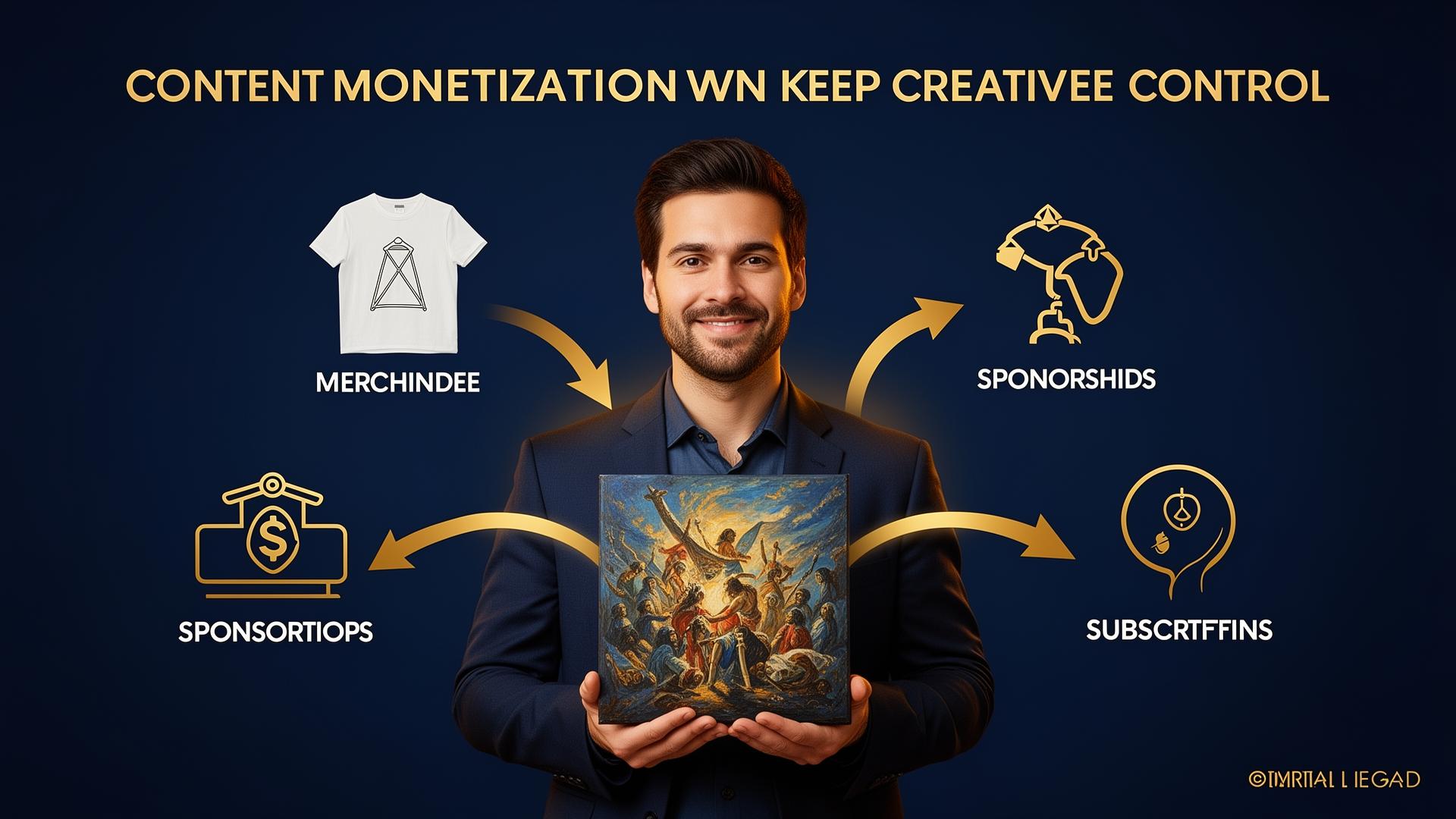
How to Monetize Your Content Without Losing Creative Control
By Andrew R. Jacobs, Esq. | Founder & Managing Attorney, Jacobs Counsel LLC | Director, Sports, Entertainment & Gaming Initiatives, Seton Hall University School of Law | Super Lawyers Rising Star 2026
Quick answer
Your content is an asset you built. The goal of monetization is not just to generate revenue, but to do so while retaining control of that asset. Every monetization channel comes with a tradeoff between money and control.
Your content is an asset you built. The goal of monetization is not just to generate revenue, but to do so while retaining control of that asset. Every monetization channel comes with a tradeoff between money and control. A bad deal can strip you of ownership, limit your future opportunities, and dilute your brand. A good deal funds your work and amplifies your voice.
This guide provides a framework for monetizing your content on your terms. We will break down the primary channels—licensing, direct-to-consumer, crowdfunding, and partnerships—and outline the key terms you must control to protect your edge.
Channel 1: Licensing Agreements
Licensing is the process of granting a third party the right to use your content for a specific purpose, in a specific territory, for a specific time. You are not selling your work; you are leasing it. The contract is where you define the terms of that lease. Control of the contract is control of your content.
Key Terms to Control in a License Grant
If you give away control in the contract, you give away control of your work. The license grant is the core of the agreement and must be precise. Vague language creates risk.
Scope of Use: The agreement must define exactly how the licensee can use your content. Media: Where will it appear? "Digital use" is too broad. Specify which digital platforms (e.g., "licensee's Instagram and TikTok accounts only"). If for print, is it a billboard or a brochure? Each use case has a different value.
Territory: Where can the content be used geographically? Granting "worldwide" rights is a significant concession that should command a premium fee. Limit the grant to the territories where the licensee actually operates.
Duration: How long can they use the content? A one-year term is standard. Avoid granting rights "in perpetuity" (forever) unless the compensation is substantial enough to justify giving up future revenue from that asset.
Exclusivity: This term determines if you can license the same content to others. Non-Exclusive License: You grant rights to a licensee but can also grant the same rights to others. This allows you to generate multiple revenue streams from a single piece of content. This should be your default position. Exclusive License: You grant rights to a single licensee, and you cannot license the work to anyone else during the term. This limits your monetization potential, so it must come with a significantly higher fee. Always define the scope of exclusivity narrowly (e.g., "exclusive in the carbonated beverage category," not "exclusive in all beverages").
Failure to control these terms means the licensee will define them for you, almost always in their favor.
Channel 2: Direct-to-Consumer (DTC) Models
The DTC model offers the highest degree of control because you own the entire vertical stack, from creation to distribution to the customer relationship. Instead of renting your content to others, you are building a business around it. This channel requires more operational effort but offers uncapped upside and total creative freedom.
DTC Monetization Structures
Subscriptions and Memberships: Platforms like Patreon, Substack, or your own gated website allow you to sell recurring subscriptions in exchange for premium content. This creates a predictable, stable revenue stream directly from your most loyal audience. You control the pricing, the content, and the platform. The risk is becoming dependent on a platform whose terms of service can change.
Digital Products: Package your expertise into sellable digital products like e-books, online courses, or software templates. You create the asset once and can sell it infinitely with no marginal cost. This model decouples your time from your income and allows you to build a library of revenue-generating assets.
Physical Products (Merchandise): Apparel, prints, and other physical goods allow your audience to buy a tangible piece of your brand. Using print-on-demand services minimizes upfront investment and inventory risk. The key is to own the underlying intellectual property (your logos, designs, and catchphrases) by securing trademark registrations. Without trademark protection, you have no legal mechanism to stop others from selling identical merchandise.
The DTC model transforms you from a creator into an operator. It's a move toward building a sellable business, not just a personal brand.
📥 Free Download: Creator's Legal Survival Guide
Learn how copyright, trademarks, licensing and brand deals affect the business behind your content.
Download Free GuideChannel 3: Crowdfunding
Crowdfunding allows you to raise capital directly from your audience to fund a specific project. It validates demand before you invest significant time and money, and you retain full ownership of the final product.
Key Platforms and Structures
Project-Based Crowdfunding (Kickstarter, Indiegogo): You pitch a project and offer rewards to backers based on their contribution level. This is a powerful tool for ambitious projects like a documentary film, a software application, or a physical product line. You get the capital you need without giving up equity or creative control to traditional investors.
The Legal Structure: A crowdfunding campaign is a series of contracts. You are legally obligated to deliver the rewards you promise. Failure to do so can result in legal action. Your campaign terms must be clear about deliverables, timelines, and what happens if the project is delayed or fails.
Crowdfunding is a test of your ability to market and deliver. Success builds immense trust with your audience, while failure can cause significant brand damage.
Channel 4: Strategic Partnerships
Partnerships and sponsorships are similar to licensing but often involve a deeper brand integration. A company pays you to incorporate their brand into your content. This can be highly lucrative, but it also presents the highest risk to your creative control and authenticity.
Protecting Your Brand in a Partnership
Vetting for Alignment: A partnership is an endorsement. If you partner with a brand that has a poor reputation or values that conflict with your own, that negative association transfers to you. Due diligence on potential partners is non-negotiable.
Defining Deliverables with Precision: The contract must specify exactly what you are required to create. How many posts? What are the key messages? Who provides the raw assets? Ambiguous deliverables lead to "scope creep," where the brand asks for more work than was originally agreed upon.
Final Cut and Approval Rights: The contract must state who has final approval over the content before it goes live. Your goal is to retain as much creative control as possible. A common compromise is to give the brand the right to review content for factual accuracy and compliance with their brand guidelines, but you retain the final say on the creative execution. Never cede full creative approval to the brand.
Ownership of Content: Who owns the content created for the campaign? The default position should be that you own the content, and you grant the brand a specific license to use it (as defined in Channel 1). Avoid "work-for-hire" agreements, which transfer all of your ownership rights to the brand.
Take Control of Your Monetization
Monetization is not just about making money. It's a strategic decision that defines the future of your brand. By understanding the tradeoffs of each channel and controlling the key terms in every agreement, you can build a sustainable income stream without sacrificing the creative freedom that gives your work value in the first place. Treat your content like the asset it is, and structure your deals to protect it.
Legal Disclaimer: This article is for general informational purposes only and does not constitute legal advice. Reading this article does not create an attorney-client relationship. Laws vary by jurisdiction and may change over time. You should consult counsel about your specific facts before making legal or business decisions.

About the Author
Andrew R. Jacobs, Esq.Founder & Managing Attorney at Jacobs Counsel LLC. Director of Sports, Entertainment & Gaming Initiatives at Seton Hall Law. Super Lawyers Rising Star 2026. Licensed in NY, NJ & OH.
Read full bio →Related on Content Creator Rights, IP & Brand Deals
Cornerstone guides and services
Creator Brand Deals & IP Protection
Licensing, copyright, and brand-deal strategy for content creators.
Read: Creator Brand Deals & IP ProtectionContent Creator Rights Services
DMCA, copyright registration, and brand-deal negotiation — fixed scopes.
Read: Content Creator Rights ServicesCounsel for Creators
Own your content. Close better brand deals. Build a catalog that pays.
Read: Counsel for CreatorsFound this helpful?
Creator's Legal Survival Guide
Learn how copyright, trademarks, licensing and brand deals affect the business behind your content.
Related Articles
What Does an Entertainment Attorney Do for Creators?
A brand just slid into your DMs with a five-figure sponsorship offer. The con…
Creators & EntertainmentPlatform Terms of Service: What Creators Actually Agree To
Every time you upload content to YouTube, TikTok, Instagram, or any other pla…
Creators & EntertainmentSponsorship Vs Partnership: Which Deal Type Actually Protects Your Brand?
The difference between sponsorship and partnership isn't just semantics. It's…
Keep Learning
More insights on Creators & Entertainment legal strategies
Creator's Legal Survival Guide
Learn how copyright, trademarks, licensing and brand deals affect the business behind your content.
Platform Terms of Service: What Creators Actually Agree To
Every time you upload content to YouTube, TikTok, Instagram, or any other platform, you're entering into a legal agreement.
Sponsorship vs. Partnership Deals: Understanding the Legal Difference
Brands approach creators with offers all the time, using terms like 'sponsorship' and 'partnership' interchangeably.
Enjoyed this article?
Get weekly legal insights delivered straight to your inbox. We keep it brief and useful.
Need Legal Support?
We help high-performing creators, athletes, and founders protect their brands and build sustainable businesses.