
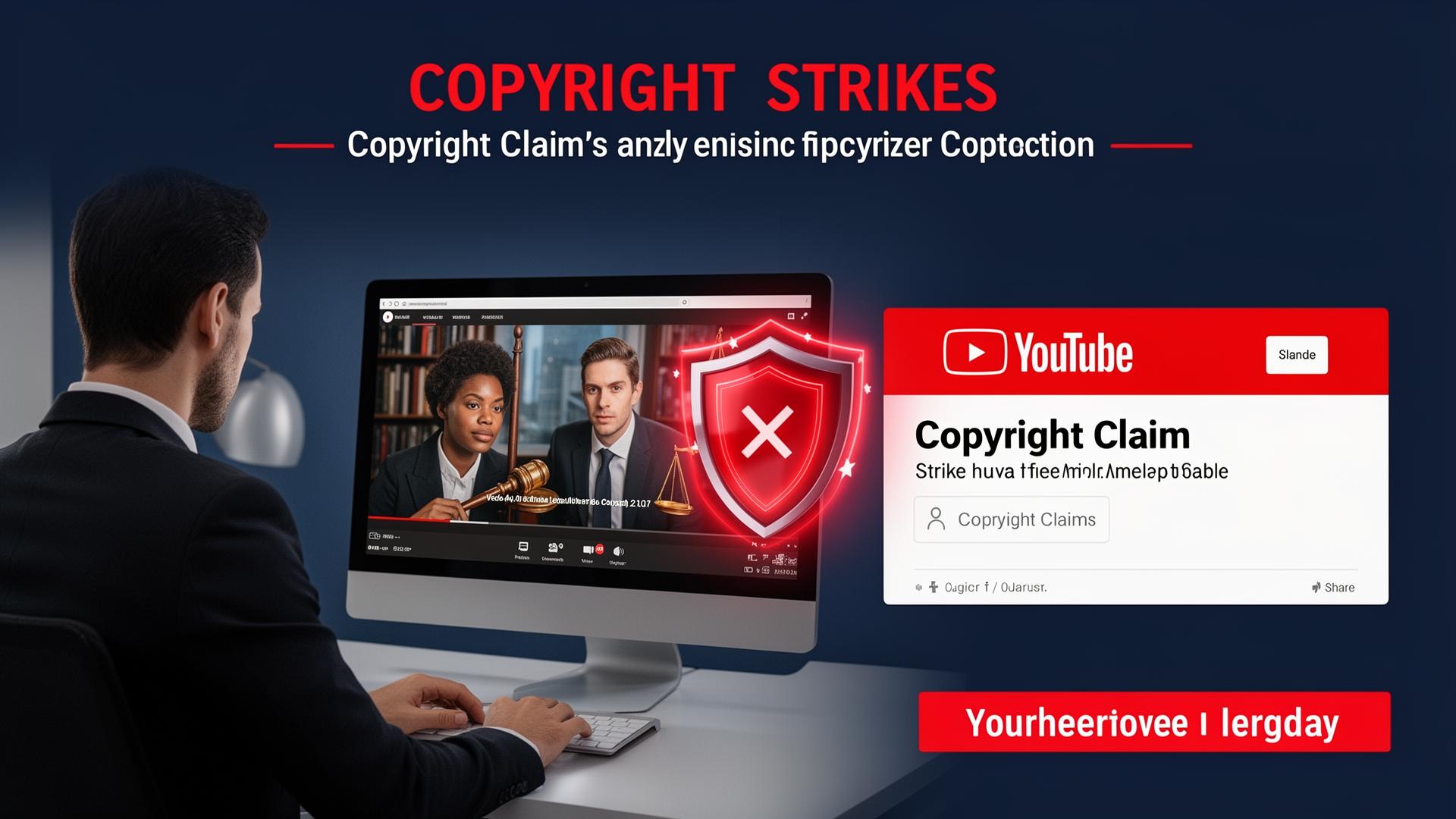
Copyright Strikes and Platform Takedowns: What Creators and Brands Should Know
By Andrew R. Jacobs, Esq. | Founder & Managing Attorney, Jacobs Counsel LLC | Director, Sports, Entertainment & Gaming Initiatives, Seton Hall University School of Law | Super Lawyers Rising Star 2026
Quick answer
Copyright strikes are usually treated as a platform problem. In practice, they are a business problem that happens to be processed through a platform. The right response depends on ownership, license scope, business urgency, and what is actually at stake — not on a generic checklist.
Quick answer: Copyright strikes and takedown disputes can affect content, revenue, sponsorships, accounts, and brand relationships. Creators and businesses should first understand who owns the content, what licenses exist, whether platform rules apply, what business risk is created by the dispute, and whether a takedown, counter-notice, negotiated resolution, or contract-based response is the right next step.
Copyright strikes are usually treated as a platform problem. In practice, they are a business problem that happens to be processed through a platform. The right response depends on ownership, license scope, business urgency, and what is actually at stake — not on a generic checklist.
Copyright Strikes Are Business Problems, Not Just Platform Problems
A strike or takedown can affect monetization, campaign deadlines and deliverables, account standing, brand and sponsor relationships, distribution across platforms, and even diligence reviews for media businesses, agencies, or startups raising capital. For creators, athletes, podcasters, streamers, YouTubers, TikTok creators, newsletter operators, agencies, production companies, AI companies, and brands, the cost of a single dispute is rarely just the one piece of content — it is the downstream impact on the business.
What Can Trigger a Copyright Strike or Takedown
Common triggers include:
- Music used as background, intro, outro, or in transitions
- Photos and graphics, including stock images and memes
- Video clips from film, TV, news, or other creators
- Sports clips, game footage, and broadcast content
- Podcast and audio clips, including interview excerpts
- Livestream content, including reactions and co-streams
- Background content visible in B-roll or shot lists
- Reposted social content and "found" clips
- Contractor-created content where rights were not clearly transferred
- Brand campaign assets used beyond the licensed scope
- AI-assisted, remixed, or templated content using third-party inputs
- Reused footage from older projects with unclear or expired rights
Whether any specific use is infringing is fact-specific. The list above identifies recurring risk areas, not legal conclusions about particular content.
First Question: Who Owns the Content?
Before responding to a strike — or sending one — the threshold question is ownership. That can be more complicated than it looks. Possibilities include creator-owned content, employee-created content, contractor or freelancer-created content, agency-created content, photographer, videographer, or designer work, and brand-owned campaign content delivered to a creator.
Ownership often turns on written agreements: assignments, work-made-for-hire provisions where applicable, and license terms. Paying an invoice does not, by itself, transfer copyright in every situation. Many disputes ultimately come down to an unclear chain of title — not whether someone "intended" to own the work. [Attorney review: ownership, work-made-for-hire, and assignment language is fact-specific and should be reviewed against the underlying engagement and applicable law.]
Second Question: What Rights Were Granted?
Even when ownership is clear, the next question is what was licensed. Common rights questions include platform posting rights, organic versus paid media use, whitelisting or boosting, sublicensing to other parties, term and territory, editing and derivative rights, music and stock licenses, brand-deal usage rights, and post-term use after a campaign ends.
Many "copyright strike" situations are actually license-scope disputes — content used beyond what the underlying agreement allowed. The fastest resolution is often in the contract, not the platform. See Creator Licensing Agreements for related framing.
Platform Rules and DMCA-Style Processes
Major platforms operate their own copyright reporting and dispute systems. At a high level, these systems typically involve takedown notices, counter-notifications, strikes or account penalties, and reinstatement processes — and they may interact with statutory frameworks like the DMCA in the United States.
Platform processes vary, change over time, and are administered by the platforms on their own timelines. They are not a substitute for legal advice, and platform action is not guaranteed in either direction. Filing a counter-notification, in particular, can have legal consequences and should not be treated as a casual click-through. [Attorney review: DMCA and platform-specific takedown and counter-notification language should be confirmed against current platform policies and applicable law before acting.]
📥 Free Download: Brand Protection Blueprint
Understand trademark rights, filing strategy, monitoring and expansion before investing further in your brand.
Download Free GuideFair Use Is Not a Simple Yes/No Shortcut
Fair use is often invoked, but it is a fact-specific doctrine with uncertain outcomes. Courts consider multiple factors, including the purpose and context of the use, the amount used, the degree of transformation, commercial versus non-commercial nature, and the effect on the market for the original work. Categorical claims — "reactions are always fair use," "under 30 seconds is fine," "commentary is automatically protected" — are not reliable.
Beyond doctrine, practical factors matter: platforms enforce their own policies regardless of how a court might rule, automated detection systems do not analyze fair use, and litigation and account risk can be significant. Relying on fair use as a routine business strategy — rather than as a carefully considered defense in specific situations — is risky.
Responding to a Strike or Takedown
When a notice arrives, a typical sequence is:
- Read the notice carefully and identify the allegedly infringed work
- Confirm internal ownership and license history for the content at issue
- Review relevant contracts (brand deals, contractor agreements, stock and music licenses)
- Preserve evidence (original files, project files, communications, approvals)
- Note platform deadlines and any automatic penalties
- Evaluate business risk: campaign timing, sponsor obligations, account standing, cross-platform impact
- Consider negotiated resolution with the claimant where appropriate
- Consider a counter-notice only where the facts and law genuinely support it
- Consider editing, replacing, or removing the content as a commercial decision
- Coordinate with brand, agency, and platform partners whose interests are affected
The right path is not always escalation. Sometimes the right move is to take the content down and move on; sometimes it is to push back; sometimes it is to renegotiate the underlying deal.
When the Creator Owns the Content Being Misused
Strikes also run the other direction. When a creator or brand owns content that someone else is using without permission, practical steps include documenting ownership, capturing screenshots and URLs, filing platform reports, sending demand letters where appropriate, negotiating a license or removal, and tracking repeat infringers.
Enforcement is a business decision. Not every misuse is worth pursuing, and over-enforcement can damage relationships, attract negative attention, and consume resources better spent elsewhere. A reasonable approach weighs the value of the work, the scope of the misuse, the cost and likely outcome of action, and whether enforcement supports broader commercial goals.
Brand Deals, Sponsorships, and Copyright Strikes
In brand work, copyright strikes can disrupt campaigns mid-flight. Recurring issues include which party is responsible for clearing assets, indemnity language, usage rights and paid media permissions, music and footage clearance, agency responsibilities, approval rights, post-term use, and takedown obligations if the deal ends or if a dispute arises.
Strong brand agreements address these issues before there is a problem. For deal-level framing, see Endorsement Deal Red Flags for Athletes and Social Media Rights in NIL and Athlete Brand Deals.
AI, Remixes, and Synthetic Content
AI-assisted edits, synthetic voice and image, automated clip generation, remix templates, and content built on third-party styles or likenesses create new copyright-strike questions. So do training inputs, model outputs, and contractual restrictions on AI-modified versions of licensed content.
The underlying law in this area is unsettled and varies by jurisdiction. Practical protection tends to come from contracts — clear restrictions on AI use, training, derivative works, and synthetic likenesses — and from internal review of AI-assisted assets before publication. For a related framing, see AI Tools and Copyright: Legal Issues Startups Should Review. [Attorney review: AI-generated content, training data, and synthetic media issues are evolving and should be assessed against current law and platform policy.]
Preventing Future Strikes
- Keep ownership records for original content and key assets
- Use written contractor assignments and clear IP language
- Track music, stock, and footage licenses centrally
- Save campaign approvals and brand-deliverable sign-offs
- Control music and stock assets through approved sources
- Review brand-deal usage rights before reposting or boosting
- Limit paid media and whitelisting permissions to defined windows
- Document platform-specific permissions and any special grants
- Build internal clearance workflows for high-risk content
- Use takedown and counter-notice escalation deliberately, not reflexively
How Jacobs Counsel Helps
Jacobs Counsel helps founders, creators, athletes, startups, and businesses protect names, brands, content, copyrights, trademarks, licensing rights, and other valuable intellectual property. On copyright strike and takedown matters, that typically means reviewing ownership and license scope, coordinating responses to disputes, advising on counter-notice and escalation decisions, and tightening contracts and clearance workflows so the same issue is less likely to recur. See our Content Creator services and Brand & IP services.
Conclusion
Copyright strikes should be handled with both legal and business judgment. The best response depends on ownership, license scope, platform rules, business urgency, account risk, and whether escalation helps or hurts the creator's or brand's broader commercial goals. For more, see our Creators & Entertainment hub, Brand & IP hub, Copyright for Creators, Startups, and Online Businesses, Creator Licensing Agreements, Personal Brand Legal Protection for Creators, Athletes, and Founders, Trademark and Brand Protection for Entrepreneurs, Creators, and Startups, AI Tools and Copyright: Legal Issues Startups Should Review, Social Media Rights in NIL and Athlete Brand Deals, and Endorsement Deal Red Flags for Athletes.
Legal Disclaimer: This article is for general informational purposes only and does not constitute legal advice. Reading this article does not create an attorney-client relationship. Laws vary by jurisdiction and may change over time. You should consult counsel about your specific facts before making legal or business decisions.
About the Author
Andrew R. Jacobs, Esq.Founder & Managing Attorney at Jacobs Counsel LLC. Director of Sports, Entertainment & Gaming Initiatives at Seton Hall Law. Super Lawyers Rising Star 2026. Licensed in NY, NJ & OH.
Read full bio →Related on Content Creator Rights, IP & Brand Deals
Cornerstone guides and services
Creator Brand Deals & IP Protection
Licensing, copyright, and brand-deal strategy for content creators.
Read: Creator Brand Deals & IP ProtectionContent Creator Rights Services
DMCA, copyright registration, and brand-deal negotiation — fixed scopes.
Read: Content Creator Rights ServicesCounsel for Creators
Own your content. Close better brand deals. Build a catalog that pays.
Read: Counsel for CreatorsFound this helpful?
Brand Protection Blueprint
Understand trademark rights, filing strategy, monitoring and expansion before investing further in your brand.
Related Articles
What Changed for NIL Deals and Collectives in 2026?
A practical look at the 2026 NIL landscape: the House settlement, the Protect…
Gaming & ComplianceWhat the 2026 PA Skill Games Ruling Means for Operators
Pennsylvania's Supreme Court held skill games are illegal slot machines, with…
AI & StartupsHow AI Startups Should Structure Their Legal Team at Seed and Series A
A practical guide for AI and technology founders on building a legal function…
Keep Learning
More insights on Brand & IP legal strategies
Brand Protection Blueprint
Understand trademark rights, filing strategy, monitoring and expansion before investing further in your brand.
Trademark and Brand Protection for Entrepreneurs, Creators, and Startups
Professional Trademark Strategy: Building a Lasting Brand
In the creator economy, your brand is your most valuable asset. It's what distinguishes you from thousands of other talented individuals and creates lasting…
Enjoyed this article?
Get weekly legal insights delivered straight to your inbox. We keep it brief and useful.
Need Legal Support?
We help high-performing creators, athletes, and founders protect their brands and build sustainable businesses.