
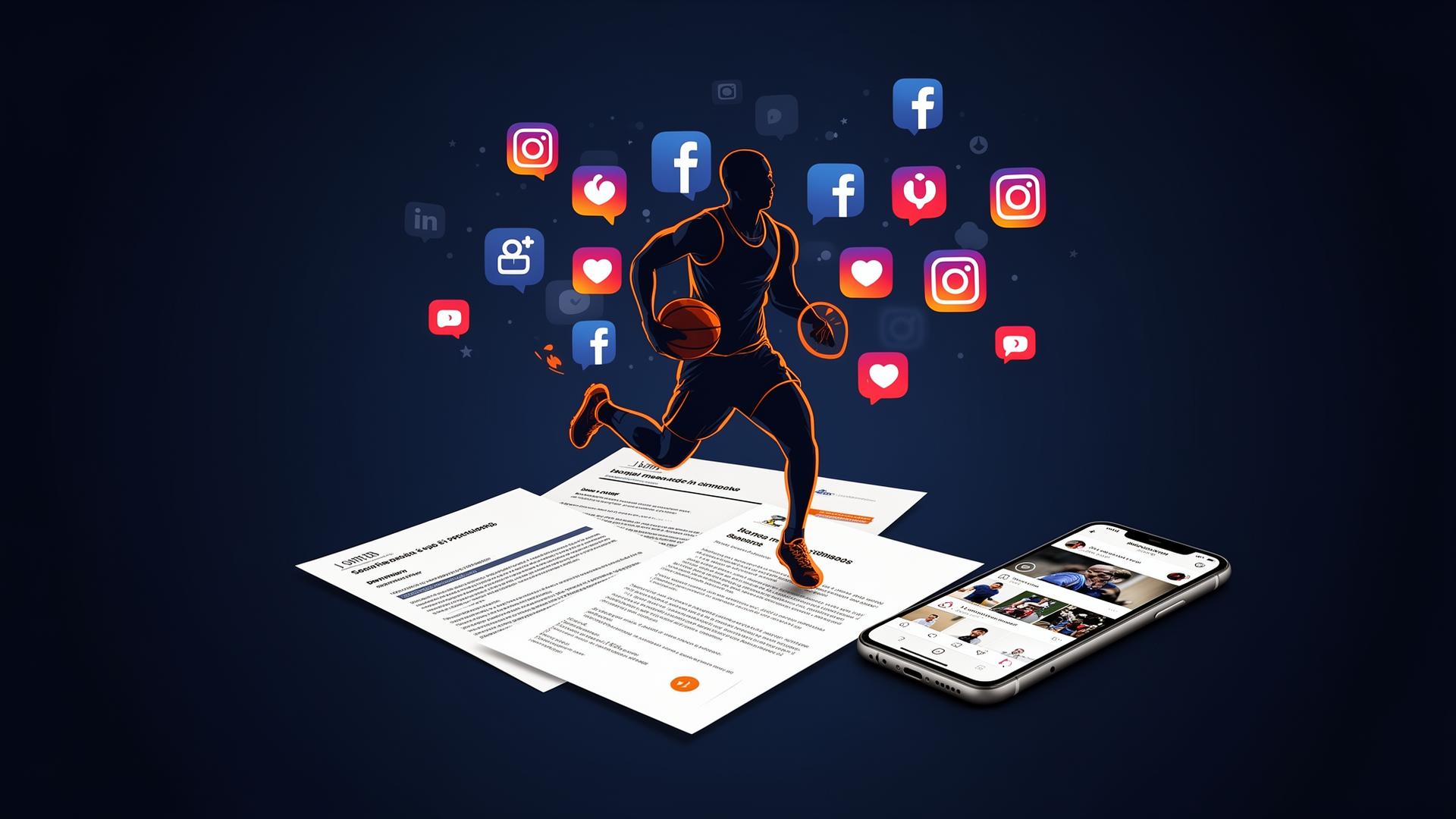
Social Media Rights in NIL and Athlete Brand Deals
By Andrew R. Jacobs, Esq. | Founder & Managing Attorney, Jacobs Counsel LLC | Director, Sports, Entertainment & Gaming Initiatives, Seton Hall University School of Law | Super Lawyers Rising Star 2026
Quick answer
Athletes should review social media rights carefully because an NIL, sponsorship, or endorsement deal may give a brand more than a single post. The agreement may control how content is used, edited, boosted, reposted, licensed, whitelisted, or used in paid advertising, and those rights can affect future deals and long-term brand value.
Athletes should review social media rights carefully because an NIL, sponsorship, or endorsement deal may give a brand more than a single post. The agreement may control how content is used, edited, boosted, reposted, licensed, whitelisted, or used in paid advertising, and those rights can affect future deals and long-term brand value.
- A social media clause often controls how an athlete''s content and likeness can be used long after the original post. - Posting obligations and usage rights are different things and should be negotiated separately. - Whitelisting and paid-media rights can expand a brand''s reach far beyond the athlete''s organic audience. - Exclusivity, category, and territory terms can block future deals if not scoped carefully. - School, team, conference, governing body, collective, and platform rules can all affect what is actually allowed.
1. Why Social Media Rights Matter in Athlete Deals
For many athletes, the most valuable part of an NIL, sponsorship, or endorsement deal is not the single post — it is what the brand can do with that content afterward. A photo, reel, or video can be edited, reposted, boosted as a paid ad, used on the brand''s website, licensed to a retailer, or repurposed for years. Social media rights determine how far the athlete''s content and likeness can travel and for how long.
Because content can outlive the deal, social media clauses often have more long-term impact than the upfront fee. Athletes, families, agents, managers, collectives, and brands should treat these clauses as a core commercial term, not boilerplate.
2. Posting Obligations vs. Usage Rights
These are two different rights, and they should be addressed separately in the agreement:
- Athlete obligation to post. What the athlete must create and publish — number of posts, platforms, format, hashtags, tags, captions, FTC disclosures. - Brand right to repost. Whether the brand can share the athlete''s content on its own channels. - Brand right to use content in ads. Whether the brand can run the athlete''s content as paid advertising on the same or different platforms. - Brand right to edit or repurpose. Whether the brand can cut, recut, caption, translate, or combine the content with other materials. - Brand right to use athlete NIL off-platform. Whether the brand can use the athlete''s name, image, likeness, voice, or content on its website, email, retail, OOH, packaging, or other channels.
Bundling these rights into a single broad license is common, but it is also where athletes give up the most value without realizing it.
3. What Content Is Covered?
The agreement should be specific about which content is in scope. Categories to address include:
- Instagram posts, Reels, and Stories - TikTok videos - YouTube videos and Shorts - X / Twitter posts - Facebook posts - Twitch or other live streams - Photographs and behind-the-scenes content - Appearances and event content - Autographs, memorabilia, or other content assets, if relevant - Content created by the brand featuring the athlete
Vague language like "all social media content" can sweep in personal posts, training content, or material created with other partners. Scope it.
4. Usage Rights and Licensing
This is where most of the long-term value sits. Negotiate each element:
- License vs. ownership. Athletes usually grant a license; brands sometimes ask for ownership or a work-for-hire structure. Those are very different outcomes. - Duration. How long can the brand use the content? Campaign window, plus a defined tail. - Territory. U.S. only, North America, worldwide. Scope it to what the brand actually needs. - Platforms / channels. Social only, or also website, email, retail, paid media, OOH, packaging. - Exclusivity. Whether the athlete can do similar deals in the same category during the term. - Paid media. Whether content can be used in paid advertising and on which platforms. - Organic reposting. Whether the brand can share content on its own channels without paid spend. - Editing rights. Whether and how the brand can modify the content. - Sublicensing. Whether the brand can pass these rights to retailers, agencies, affiliates, or other third parties. - Rights after termination. What happens to live posts, archived content, paid ads, and licensed materials when the deal ends.
[Attorney review: consider adding current NIL rule, platform-policy, school-policy, or rights-of-publicity reference here.]
5. Whitelisting and Paid Media
Whitelisting generally refers to an athlete (or creator) giving a brand permission to run paid ads through the athlete''s own social account or handle, so the ad appears to come from the athlete rather than the brand. Brands often want this because ads delivered from a trusted personal account tend to perform differently than ads from a brand account.
Athletes considering whitelisting should understand and negotiate:
- Ad control. Who builds the ad, who approves the creative, and who controls targeting. - Duration. How long the brand can run ads through the athlete''s handle. - Budget and scale. Whether there is a cap on spend, audience size, or geographic reach. - Copy and creative. Whether captions, edits, or new creative can be added. - Targeting. Audience, geography, age, interests, and any sensitive categories. - Approval rights. Whether the athlete sees and approves ad creative and changes. - Reporting. What performance data the athlete receives. - Termination. How the athlete pulls down ads if the relationship ends or content becomes a problem.
Platform terms, ad policies, and disclosure requirements can also affect what is permissible. Those rules change over time and should be reviewed in context.
📥 Free Download: NIL and Revenue Sharing Guide
Understand school payments, outside NIL deals and the contract questions that affect an athlete’s earnings.
Download Free Guide6. Approval Rights and Brand Control
Approval mechanics protect both sides. Address:
- Who approves content and within what timeline - How revisions are handled and how many rounds are allowed - Whether the athlete can reject brand edits to their own content - Whether approval rights are mutual or one-sided - Brand guidelines, talking points, and required claims - Restrictions on captions, comments, or community management - Reputation protection — what happens if the brand''s content choices create reputational risk for the athlete, and vice versa
7. Exclusivity and Category Conflicts
Exclusivity in social media rights can block future deals. Negotiate:
- Category scope. How narrowly is the competitive category defined? - Geographic scope. Is exclusivity worldwide, national, regional, or campus-only? - Duration of exclusivity. Does it match the deal term, extend past it, or apply only during campaign windows? - Carve-outs. Existing partnerships, school sponsors, conference sponsors, governing body sponsors, collective relationships, family business, and personal content.
A broad exclusivity clause buried in a social media section can quietly take an athlete off the market in adjacent categories.
8. Metrics, Reporting, and Performance Terms
If compensation or renewal is tied to performance, get the mechanics in writing:
- Views, impressions, reach, engagement, saves, shares - Click-throughs and conversions - Affiliate links, codes, and attribution windows - Performance bonuses and how they are calculated - Screenshots, reports, and platform analytics access - Whether minimum performance is a payment condition or just a reporting obligation - Who is responsible if platform algorithms or outages affect performance
9. School, Team, Conference, Governing Body, Collective, and Platform Restrictions
This is one of the most jurisdiction- and rule-sensitive parts of NIL. In general, athletes and brands should consider:
- School and team marks, uniforms, facilities, colors, and logos - Conference and governing body rules (which continue to evolve) - Collective policies and approval workflows - Prohibited categories (which vary by school, conference, state, and platform) - Disclosure requirements (FTC and platform) - Conflicts with team or school sponsors - Platform terms of service and advertising policies - Rule changes during the term of the deal — and which party bears that risk
State NIL laws, school policies, conference rules, governing body rules, collective policies, platform terms, and rights-of-publicity laws all interact. None of this should be treated as fixed across deals.
[Attorney review: consider adding current NIL rule, platform-policy, school-policy, or rights-of-publicity reference here.]
10. Red Flags in Social Media Rights Clauses
Common clauses worth a careful second look before signing:
- Perpetual rights - Irrevocable rights - Worldwide or all-media rights when the brand doesn''t need them - Paid media rights without athlete approval - Editing or repurposing rights without athlete review - Broad sublicensing rights (especially to affiliates, retailers, or agencies) - Broad exclusivity defined by category, geography, or platform - Rights that survive termination indefinitely - Payment tied to vague or unilateral performance metrics - Unclear or open-ended deliverables - Brand control over comments, captions, or community management - Missing termination and takedown language - No clear rule-change or compliance carve-out
How Jacobs Counsel Helps
Jacobs Counsel helps athletes, families, collectives, brands, and sports businesses review NIL agreements, endorsement deals, content rights, usage rights, agent and manager relationships, collective arrangements, and athlete business opportunities. If you are reviewing a social media clause, a whitelisting request, a paid-media term, or an exclusivity provision, we can help you understand the trade-offs before you sign. Talk to sports counsel.
Related Reading
- NIL & Athlete Deals — all articles - How to Choose an NIL Attorney - NIL Deal Negotiation: Maximizing Brand Value Without Losing Control - Endorsement Deal Red Flags for Athletes - NIL Collectives Guide - Brand & IP — all articles
Conclusion
A social media clause can be one of the most valuable parts of an NIL or endorsement deal because it controls how the athlete''s content and likeness can be used after the post goes live. Athletes, families, collectives, and brands should treat it as a core commercial term — not a formality — and scope each right deliberately.
Key Takeaways
- A social media clause often controls how an athlete''s content and likeness can be used long after the original post.
- Posting obligations and usage rights are different things and should be negotiated separately.
- Whitelisting and paid-media rights can expand a brand''s reach far beyond the athlete''s organic audience.
- Exclusivity, category, and territory terms can block future deals if not scoped carefully.
- School, team, conference, governing body, collective, and platform rules can all affect what is actually allowed.
Legal Disclaimer: This article is for general informational purposes only and does not constitute legal advice. Reading this article does not create an attorney-client relationship. Laws vary by jurisdiction and may change over time. You should consult counsel about your specific facts before making legal or business decisions.
About the Author
Andrew R. Jacobs, Esq.Founder & Managing Attorney at Jacobs Counsel LLC. Director of Sports, Entertainment & Gaming Initiatives at Seton Hall Law. Super Lawyers Rising Star 2026. Licensed in NY, NJ & OH.
Read full bio →Related on NIL & College Athlete Compensation
Cornerstone guides and services
NIL Revenue Share Guide (Explainer)
How the NCAA House settlement and 22% revenue share works for college athletes.
Read: NIL Revenue Share Guide (Explainer)Athlete Business Playbook
From college NIL deals to retirement: structuring your athlete business.
Read: Athlete Business PlaybookMedia & NIL Licensing Services
NIL contract review, deal negotiation, and brand licensing — fixed-fee scopes.
Read: Media & NIL Licensing ServicesFound this helpful?
NIL and Revenue Sharing Guide
Understand school payments, outside NIL deals and the contract questions that affect an athlete’s earnings.
Related Articles
What Changed for NIL Deals and Collectives in 2026?
A practical look at the 2026 NIL landscape: the House settlement, the Protect…
NIL & Athlete DealsHow to Choose an NIL Attorney: Questions College Athletes Should Ask
How college athletes, families, collectives, and brands should evaluate NIL c…
NIL & Athlete DealsEndorsement Deal Red Flags for Athletes
Practical pre-signing checklist: exclusivity, payment terms, usage rights, mo…
Keep Learning
More insights on NIL & Athlete Deals legal strategies
NIL and Revenue Sharing Guide
Understand school payments, outside NIL deals and the contract questions that affect an athlete’s earnings.
NIL Basics: A Guide for College Athletes
The world of college sports has changed. For decades, student-athletes were barred from earning money from their athletic fame.
How to Negotiate NIL Deals Like a Pro: Tips for Athletes
The opportunity to profit from your Name, Image, and Likeness (NIL) has transformed what it means to be a college athlete.
Enjoyed this article?
Get weekly legal insights delivered straight to your inbox. We keep it brief and useful.
Need Legal Support?
We help high-performing creators, athletes, and founders protect their brands and build sustainable businesses.