
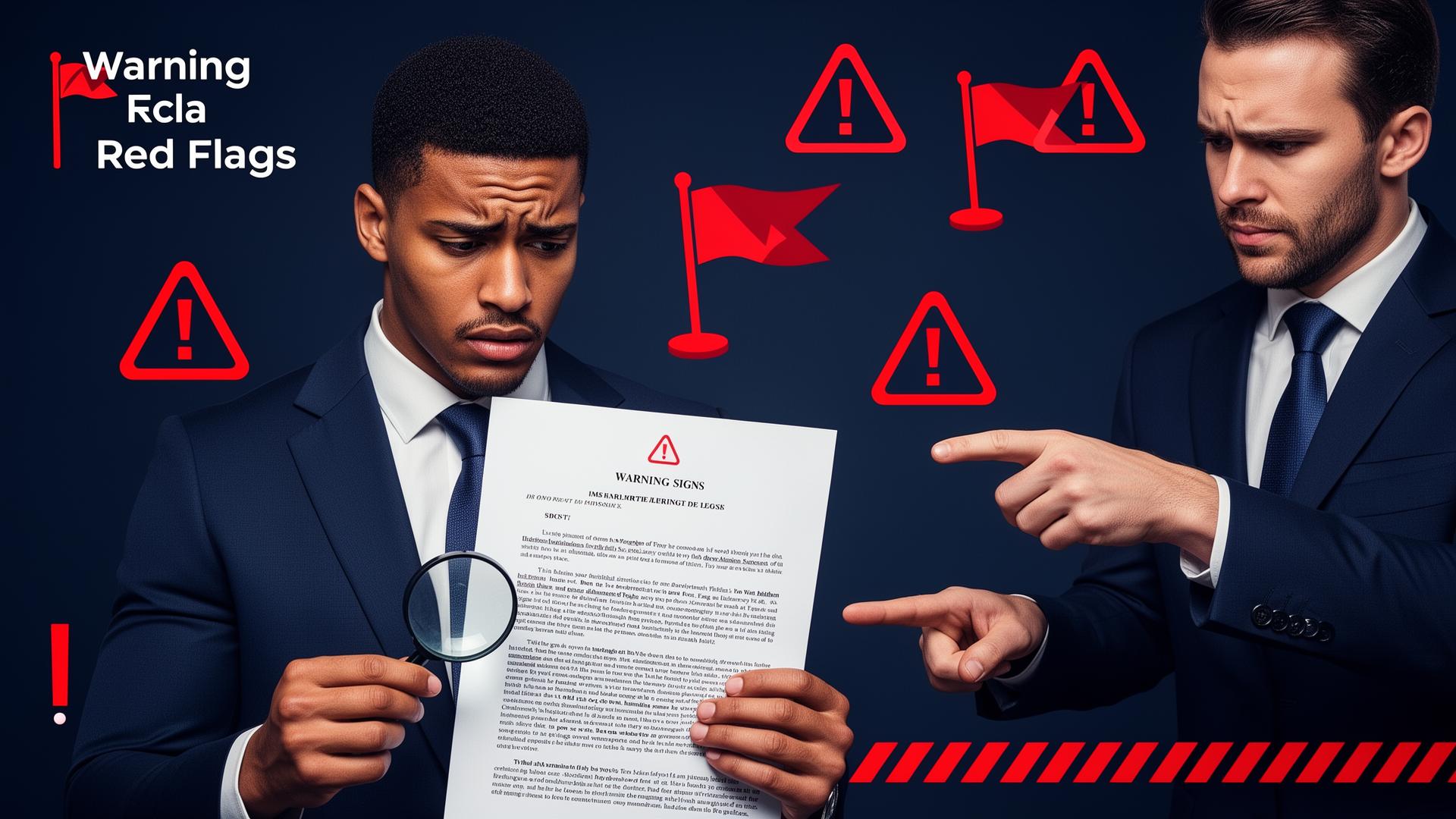
Endorsement Deal Red Flags for Athletes
By Andrew R. Jacobs, Esq. | Founder & Managing Attorney, Jacobs Counsel LLC | Director, Sports, Entertainment & Gaming Initiatives, Seton Hall University School of Law | Super Lawyers Rising Star 2026
Quick answer
Athletes should pause before signing an endorsement, NIL, sponsorship, or brand deal if the agreement includes broad exclusivity, unclear payment terms, perpetual content rights, vague deliverables, one-sided morality clauses, restrictions on future deals, unclear agent or manager compensation, or obligations that may conflict with school, team, conference, or governing-body rules.
Athletes should pause before signing an endorsement, NIL, sponsorship, or brand deal if the agreement includes broad exclusivity, unclear payment terms, perpetual content rights, vague deliverables, one-sided morality clauses, restrictions on future deals, unclear agent or manager compensation, or obligations that may conflict with school, team, conference, or governing-body rules.
- The headline payment can hide expensive terms: exclusivity, perpetual usage rights, and broad morality clauses often matter more than the dollar figure. - Vague deliverables and one-sided approval rights are where most endorsement disputes actually start. - Restrictions on future opportunities — non-competes, conflicting-sponsor language, transfer-related limits — can outlast the deal itself. - School, team, conference, collective, and governing-body rules vary and change; disclosure and conflict categories should be checked deal by deal. - Legal review is most valuable *before* signing, not after a dispute.
Why Endorsement Deal Red Flags Matter
An endorsement, NIL, sponsorship, or brand deal can look simple on the surface — a few posts, a flat fee, a short term — and still quietly affect an athlete's content rights, future sponsors, payment timing, brand control, and overall leverage for years. Red flags are not always deal-breakers. They are points that should cause an athlete and their advisors to slow down and ask: *what exactly am I agreeing to, and what does this cost me beyond the headline number?*
Red Flag 1: Broad Exclusivity
Exclusivity is one of the most expensive provisions in any endorsement deal. Watch for:
- Broad category exclusivity that locks out an entire industry (e.g., "all beverages" instead of "energy drinks") - Long lists of named competitors the athlete cannot work with - Conflicts with future sponsors the athlete is already in conversation with - Conflicts with existing school, team, conference, or collective sponsors - Long-term lockups, including "tail" periods after the deal ends
A reasonable exclusivity scope protects the brand's real investment without freezing the athlete out of larger opportunities.
Red Flag 2: Unclear Payment Terms
Payment language deserves the same scrutiny as the dollar amount. Watch for:
- No clear due dates ("payable upon completion" without defining completion) - Payment conditioned on subjective brand approval - Payment tied to performance metrics the athlete cannot control - Expenses (travel, production, glam) treated as the athlete's responsibility - No late-payment remedy - Product-only compensation with no cash component - Affiliate or commission structures with unclear tracking or reporting - Refund, repayment, or clawback language
Product-only and equity/token deals can still carry tax and reporting implications; those should be evaluated separately with a qualified tax professional.
Red Flag 3: Vague Deliverables
Most endorsement disputes are about deliverables, not money. Look for clarity on:
- Number of posts, stories, videos, or appearances - Platforms (and what happens if a platform changes or disappears) - Format and length - Deadlines and posting windows - Appearance obligations, travel, and time commitments - Revision rounds and turnaround times - Make-good provisions for missed posts - Reporting and analytics obligations
If you can't tell from reading the contract exactly what is owed and when, that is the red flag.
Red Flag 4: Overbroad Usage Rights
Usage rights frequently outlast the deal — and often matter more than the payment. Watch for:
- Broad rights to repost and republish content - Paid media rights (the brand running ads with the athlete's likeness) - Whitelisting (running ads through the athlete's own social handle) - Editing rights with no athlete approval - Worldwide territory when the brand operates in one country - All-platform rights, including "platforms now known or hereafter developed" - Long usage windows that extend well past the term - Rights that survive termination - Perpetual or irrevocable grants
A modest fee in exchange for perpetual, worldwide, all-media advertising rights is rarely a "small" deal — the brand is acquiring a long-term asset.
📥 Free Download: NIL and Revenue Sharing Guide
Understand school payments, outside NIL deals and the contract questions that affect an athlete’s earnings.
Download Free GuideRed Flag 5: One-Sided Approval Rights
Approval clauses are often written entirely in the brand's favor. Reasonable questions to ask:
- Does the brand have unilateral approval over content? - How many revision rounds can the brand demand? - Are there timing limits on brand feedback (so content isn't held indefinitely)? - Does the athlete have any approval over edits or final cuts the brand publishes? - Is there language preventing the brand from withholding approval unreasonably?
Red Flag 6: Morality Clauses That Are Too Broad
Morality clauses are common, but the scope matters. Watch for:
- Vague conduct standards ("anything that may bring the brand into disrepute") - Pure subjective brand discretion to terminate - Sweeping social media conduct standards - Triggers tied to team or school discipline regardless of facts - Termination without notice or cure period - Repayment or clawback of fees already earned
A well-drafted morality clause defines the conduct, gives notice, and limits financial consequences to fees not yet earned.
Red Flag 7: Restrictions on Future Opportunities
Some restrictions extend well beyond the term. Watch for:
- Non-compete language that lingers after the deal ends - Conflicting-sponsor restrictions broader than the category - Restrictions tied to transfer-related opportunities - Restrictions affecting future professional or league opportunities - Confidentiality and non-disparagement language that is overbroad
Red Flag 8: School, Team, Conference, or Governing-Body Conflicts
NIL rules vary by state, school, conference, governing body, collective policy, and the facts of the deal. In general, athletes should expect to evaluate:
- Disclosure requirements (what must be reported, to whom, and when) - Prohibited categories under school, conference, or governing-body policy - Conflicts with existing school or team sponsors - Use of school marks, uniforms, facilities, or logos (which usually require separate permissions) - Frequent rule changes in this space - International athlete considerations, including visa-related questions
Because the rules vary and continue to evolve, deal-by-deal review is more reliable than relying on a general summary.
Red Flag 9: Agent, Manager, or Collective Conflicts
Endorsement deals often involve multiple parties. Worth understanding:
- Who represents whom in the deal - Who is paid by whom, and how much - Commission structures and what they apply to (gross vs. net, cash vs. product) - Whether anyone in the chain has a conflict (e.g., representing both sides) - Who has authority to bind the athlete to a signed agreement - Whether the athlete can — and should — get independent legal review
Conflicts are not always disqualifying, but they need to be disclosed and understood.
Red Flag 10: No Clean Termination Right
Athletes often have less termination protection than brands do. Look for clear rights to terminate for:
- Nonpayment or chronic late payment - Brand failure to provide approvals or materials needed for deliverables - Conflicts with school, team, conference, or governing-body rules - Brand misuse of the athlete's name, image, or likeness outside the granted scope - Brand insolvency or change of control
Equally important: what happens to content and usage rights *after* termination.
When to Get Legal Review
Legal review is especially valuable before signing deals with:
- Meaningful exclusivity - Long-term or post-term usage rights - Significant compensation - Agent, manager, or agency involvement - Collective arrangements - School, team, or conference implications - Broad brand-control, morality, or termination language
The cheapest time to fix a problematic clause is before signing — not after a dispute.
Conclusion
The issue is not only whether the athlete is getting paid — it is whether the athlete understands the rights, obligations, restrictions, and future consequences attached to the payment. The deals that look easiest at signing are often the ones that quietly compound into bigger problems later.
For more on related issues, see our NIL & Athlete Deals hub, How to Choose an NIL Attorney, NIL Deal Negotiation: Maximizing Brand Value Without Losing Control, NIL Basics: A Practical Guide, Athlete Social Media Rights, and our NIL Collectives Guide. For deal-specific review, visit our Sports, Entertainment & Gaming practice.
Key Takeaways
- The headline payment can hide expensive terms: exclusivity, perpetual usage rights, and broad morality clauses often matter more than the dollar figure.
- Vague deliverables and one-sided approval rights are where most endorsement disputes actually start.
- Restrictions on future opportunities — non-competes, conflicting-sponsor language, transfer-related limits — can outlast the deal itself.
- School, team, conference, collective, and governing-body rules vary and change; disclosure and conflict categories should be checked deal by deal.
- Legal review is most valuable *before* signing, not after a dispute.
Legal Disclaimer: This article is for general informational purposes only and does not constitute legal advice. Reading this article does not create an attorney-client relationship. Laws vary by jurisdiction and may change over time. You should consult counsel about your specific facts before making legal or business decisions.
About the Author
Andrew R. Jacobs, Esq.Founder & Managing Attorney at Jacobs Counsel LLC. Director of Sports, Entertainment & Gaming Initiatives at Seton Hall Law. Super Lawyers Rising Star 2026. Licensed in NY, NJ & OH.
Read full bio →Related on NIL & College Athlete Compensation
Cornerstone guides and services
NIL Revenue Share Guide (Explainer)
How the NCAA House settlement and 22% revenue share works for college athletes.
Read: NIL Revenue Share Guide (Explainer)Athlete Business Playbook
From college NIL deals to retirement: structuring your athlete business.
Read: Athlete Business PlaybookMedia & NIL Licensing Services
NIL contract review, deal negotiation, and brand licensing — fixed-fee scopes.
Read: Media & NIL Licensing ServicesFound this helpful?
NIL and Revenue Sharing Guide
Understand school payments, outside NIL deals and the contract questions that affect an athlete’s earnings.
Related Articles
What Changed for NIL Deals and Collectives in 2026?
A practical look at the 2026 NIL landscape: the House settlement, the Protect…
NIL & Athlete DealsHow to Choose an NIL Attorney: Questions College Athletes Should Ask
How college athletes, families, collectives, and brands should evaluate NIL c…
NIL & Athlete DealsSocial Media Rights in NIL and Athlete Brand Deals
How NIL and endorsement deals control athlete content—usage rights, whitelist…
Keep Learning
More insights on NIL & Athlete Deals legal strategies
NIL and Revenue Sharing Guide
Understand school payments, outside NIL deals and the contract questions that affect an athlete’s earnings.
NIL Basics: A Guide for College Athletes
The world of college sports has changed. For decades, student-athletes were barred from earning money from their athletic fame.
How to Negotiate NIL Deals Like a Pro: Tips for Athletes
The opportunity to profit from your Name, Image, and Likeness (NIL) has transformed what it means to be a college athlete.
Enjoyed this article?
Get weekly legal insights delivered straight to your inbox. We keep it brief and useful.
Need Legal Support?
We help high-performing creators, athletes, and founders protect their brands and build sustainable businesses.